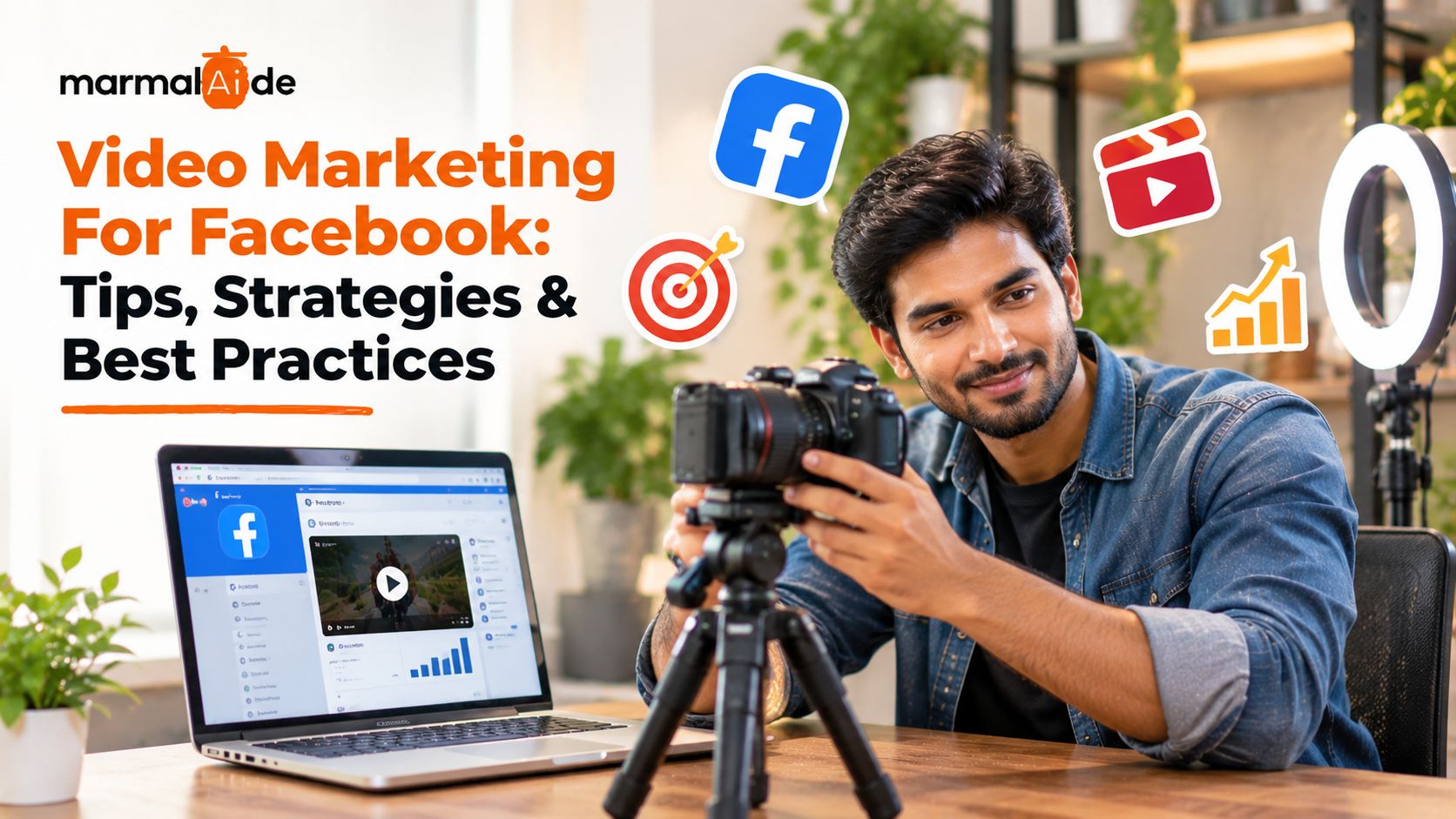
Most brands treat Facebook like a ghost town, with the verdict that “nobody uses it anymore.” So, posting a video on it feels like an obligation, which they do like shoot something, slap the logo on it, boost the post, and hope for the best. We get it. We saw that exact pattern over and over before we started producing video ads full-time and stepped inside the data.
After running hundreds of campaigns, we know the truth: the platform isn’t dead yet. According to Pew Research Center’s 2025 survey of U.S. adults, Facebook remains one of the two platforms nearly 71% of Americans still open, even in a feed crowded with newer, flashier apps. In the same research, they also shared that 37% visit Facebook several times a day, which means a well-placed video isn’t reaching people just once. It reaches a habitual audience that keeps scrolling throughout the day.
Businesses that are actually serious about video marketing for Facebook know which formats work and they run their strategy accordingly to see results. If you want to make one of the oldest social media platforms your top acquisition channel, we’ll help you with content ideas, examples, and numbers behind it.
What Is Video Marketing for Facebook?
Facebook video marketing for businesses is a concept broader than a polished ad running in someone’s Feed. It’s any piece of video content, organic or paid, that a brand uses on the platform to reach its target audience, build awareness, earn engagement, and drive a lead or sale.
It includes everything posted natively on a Facebook Page, boosted into more feeds, or built specifically as a video ad in Ads Manager.
In practice, these are
Organic video posts on a Facebook Business Page
Facebook Reels and short-form vertical video
In-feed video ads
Facebook Stories ads
Live video and Q&A sessions
Video content repurposed from other channels, such as webinars or product launches
Unlike a single ad format, a real Facebook content marketing plan treats these as one connected system. Organic content tests what resonates; paid budget scales what works. Nothing gets produced once and forgotten.
Why Does Video Marketing Matter on Facebook for Businesses?
It’s fair to ask whether Facebook still matters as much as it used to. Based on Meta’s own numbers, the answer is yes. In its Q2 2026 results, Meta reported Family daily active people of 3.60 billion, up 3% year over year, with Facebook continuing to hold more than 2 billion daily active users. In easy terms, that’s not a platform in decline. It’s one of the largest, most consistently engaged audiences of any platform, and video content converts attention into action better than static posts. According to HubSpot’s 2026 State of Marketing Report, 93% of marketers say short-form video is the highest-ROI content format they use.
However, one thing we think doesn’t get talked about enough is that Meta also reported ad impressions across its Family of Apps grew 14% year over year, while the average price per ad rose 12%. That indicates more businesses are competing for the same attention, and it’s getting more expensive to reach people with weak creative.
Creative quality is the lever most businesses underuse, and media spend is what they overuse. It’s the difference between running video advertising that gets scrolled past and video that earns the click.
A few more reasons video marketing on Facebook deserves budget and attention:
Sound-off viewing is the default, not the exception. Most Facebook video is watched muted, which is why Meta’s own guidance on video ad captions instructs advertisers to add captions so viewers can follow along without sound. A video built only around narration loses its message before it earns a click.
Video builds trust faster than text. A product demo, founder story, or customer testimonial can communicate credibility in fifteen seconds that a paragraph of ad copy takes much longer to establish.
Video content is reusable across the funnel. One well-planned shoot can produce an awareness-stage brand video, a mid-funnel explainer, and several short-form ad cutdowns for retargeting.
Facebook’s ad specs are built around mobile-first video. Meta’s video ad guidelines for Feed are designed around movement and sound working together to show a product or brand story quickly, which rewards businesses that plan creative for the platform rather than repurposing a TV spot as-is.
One more reason why that reach matters is: Facebook’s advertising tools let businesses combine that scale with detailed targeting by job title, company size, industry, and behavior. So, video content can reach decision-makers directly rather than relying on broad brand awareness alone.
Building a Facebook Video Marketing Strategy That Doesn’t Waste Ad Spend
Good video marketing strategies start with a clear objective for each piece of content, a distribution plan across organic and paid, and a testing process that improves performance over time. Here’s how to build one.
1. Define the Objective Before the Concept
Before anyone writes a script, decide what the video needs to do. Map every video to one stage of the funnel: awareness, consideration, or conversion. A brand story serves a different purpose than a demo video, and a demo serves a different purpose than a retargeting ad with a discount code. Without a clear job description, a video almost always tries to do too much and ends up doing nothing well.
2. Assume No Sound Until Proven Otherwise
Design every video as if the sound is off, because for most viewers, it is. Captions and on-screen text should carry the full message on their own. Voiceover and music are a bonus layer for people who choose to unmute, never the only way to understand what’s happening.
3. Give It Three Seconds to Earn Attention
Facebook Feed moves fast, and a video that doesn’t earn attention in the opening seconds rarely gets a second chance. Open with your strongest visual, a bold claim, or a question your audience is already asking themselves, and put your brand or product in frame early so even a partial view leaves an impression.
4. Build for the Feed It Will Actually Run In
If your video is built for Reels, it shouldn’t just get resized for Feed, and a Feed video shouldn’t get stretched for Stories. Shooting with multiple aspect ratios in mind from the start keeps every placement looking intentional instead of repurposed at the last minute.
5. Repurpose Content Instead of Starting Over Each Time
Just a single day of production can produce a brand story, a handful of ad cutdowns, a few review clips, and organic content, if it’s planned that way from the start. Working with a team expert in product and explainer videos pays off. One concept, produced once, becomes weeks of usable content instead of a single post that disappears in a day.
6. Mix Organic and Paid Distribution
Organic Facebook video builds community and long-term engagement, while video advertising extends reach to audiences who don’t already follow your Page. Use organic content to test messaging and paid budget to scale what performs.
6. Let Performance Data Choose the Next Video
Track hook rate, watch time, click-through rate, and the conversions that follow, then let that data decide what gets made next. This is the core idea behind performance creative: treating every video as a hypothesis you can test, rather than a one-time bet on a single idea.
What Facebook Video Content Ideas Work Best for Businesses?
Strategy only matters if you have something worth filming: content that gives viewers something specific and useful, not a generic brand message. These are the formats that consistently earn attention and hold up across industries:
Product and Service Demos
Show the product solving an existing problem instead of describing it. Product and explainer videos work especially well for B2B offers that need a visual walkthrough to click.
Customer Testimonials and Case Studies
Let real customers explain results in their own words. Social proof is one of the most persuasive formats on any paid social platform.
Behind-the-Scenes Content
Show your team, process, or workspace to build familiarity and trust, especially for businesses selling to other businesses that want to know whom they’re working with.
Educational and How-To Videos
Answer the questions your audience is already searching for. These videos also tend to have longer watch times because viewers are actively looking for the information.
Short-Form Ads Built for the Feed
Fifteen to thirty-second ads with a fast hook, clear offer, and strong CTA consistently outperform longer, unfocused creative in cold-audience campaigns.
Founder and Brand Story Videos
A short video introducing the people and mission behind a business can help a brand stand out in a crowded category.
Live Video and Q&A Sessions
Live formats create real-time engagement and can be repurposed into clips after the broadcast ends.
Event Recaps and Community Content
Conference highlights, webinars, and customer events give B2B brands authentic content that doubles as social proof.
What Are the Best Practices for Facebook Video Marketing?
| Best Practice | Why It Matters |
| Hook viewers in the first 3 seconds | Feeds move fast; a slow open gets scrolled past |
| Add captions to every video | Most Facebook video is watched with sound off |
| Optimize for mobile-first vertical or square formats | The majority of Facebook time happens on mobile devices |
| Keep a clear, single call-to-action | Multiple asks in one video reduce conversion clarity |
| Front-load your branding | Ensures brand recall even from a partial view |
| Test multiple hooks per video body | Different openings can dramatically change performance |
| Track outcomes beyond views | Watch time, leads, and conversions show real business impact |
Turning Facebook Video Strategy Into Execution With Marmalaide
Marmalaide combines AI-powered video production with creative strategy, helping brands turn Facebook video content ideas into finished, campaign-ready assets without coordinating multiple freelancers or agencies. For Facebook-specific campaigns, Marmalaide can help produce:
AI UGC ads built for cold-audience Feed and Reels placements
Product demo and explainer videos designed to convert consideration-stage traffic
Founder stories and brand films that build trust with B2B buyers
Localized creative variations for different regions, audiences, and campaigns
Static ads, carousels, and video cutdowns for full-funnel distribution
Ongoing performance creative iterations to keep campaigns fresh as fatigue sets in
Marmalaide’s subscription plans give teams an always-on source of Facebook-ready video, so testing new hooks, formats, and offers doesn’t require rebuilding your production process every quarter.
Our $1,999 Pilot includes a 30-second master video, two 10–15-second cutdowns, and two static ads or posts, adapted for the channels and audiences that matter most to your business. Test the fix before you commit!
Frequently Asked Questions
What makes a Facebook video ad “good” in 2026?
Production value matters less than a clear, well-executed idea. A good Facebook video ad earns attention in the first three seconds, communicates its message clearly without sound, and drives toward a single, clear action.
What’s the difference between organic and paid Facebook video marketing?
Organic video builds engagement with an existing audience and tests messaging at no media cost, while paid video ads extend that content to new, targeted audiences beyond your current followers.
Should Facebook videos be vertical or horizontal?
Match the format to the placement. Vertical (9:16) works best for Reels and Stories, while square (1:1) or portrait (4:5) formats perform well in the main Feed.
How often should a business post video content on Facebook?
Post as often as you can sustain without sacrificing quality. A consistent, manageable schedule that you can maintain and iterate on will outperform sporadic bursts of high-effort content followed by long gaps.
Do organic Facebook videos still get reach in 2026?
Organic video can still build engagement with an existing audience, but paid distribution extends reach to new audiences at scale. For effective results, use organic content to test messaging before putting budget behind what performs.