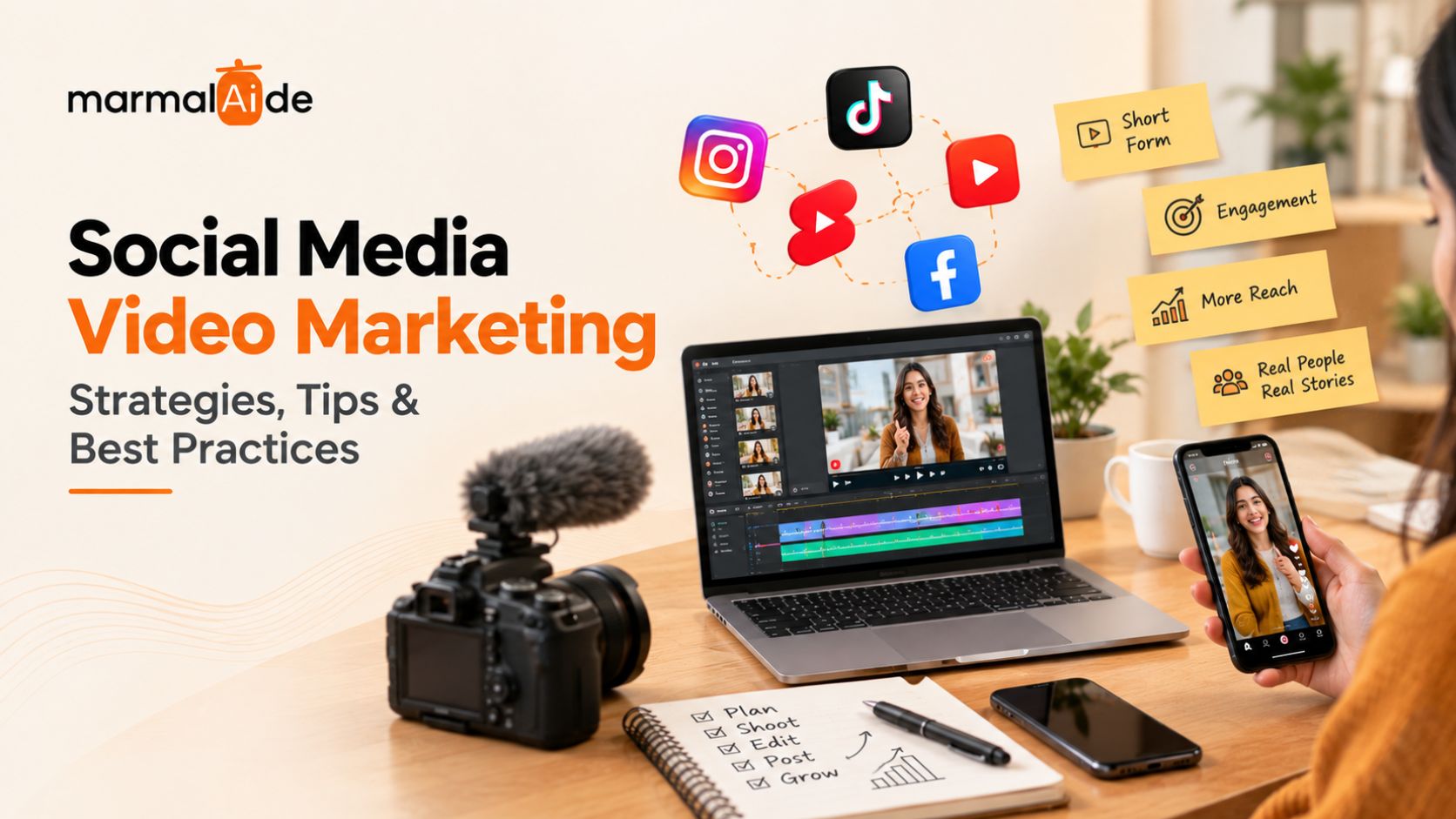
Scroll through any social feed right now and count how many text-only posts actually make you stop. Not many. Social media platforms have quietly rebuilt themselves around motion: 91% of businesses now use videos as a marketing tool, according to Wyzowl’s 2026 State of Video Marketing report.
Imagine your buyer who has their next meeting in 30 seconds. Just to kill the time, they open LinkedIn and land on your brand’s last post, which was a text update from six days ago. Right below it, a competitor’s 45-second product walkthrough catches their eye and stops the scroll cold. If your feed is still leaning on static graphics, stock photography, and text-only posts, you’re not competing on equal footing. You’re competing from behind.
It’s usually not a lack of ideas that gets brands into this spot. It’s time. According to the same Wyzowl report, one in five marketers names “finding the time to create it” as the only actual bottleneck in social media video marketing. So instead of another reason to care about video, here’s what actually helps a small team ship more of it, consistently.
Why Does Social Media Video Marketing Matter?
Online video advertising has seen a shift over the past few years. Your audience is on the same platforms as you, scrolling with the same short fuse, which may actually work in your favor to earn a stop-and-watch, especially when the content is genuinely good. No outspend on production, no in-house studio down the hall to shoot a clip. Just a repeatable system that treats videos like a measurable source, not a one-off campaign asset. HubSpot’s State of Marketing Report states that short-form content delivers the highest ROI of any digital content format, ahead of blogs, email, and long-form video.
However, this shift has made a few things harder. Although every platform Meta, TikTok, YouTube, and LinkedIn rewards video now; buyer attention has shrunk over time, and audiences get tired fast of the same repetitive format. Teams end up stuck in the same loop: they need a steady flow of content to keep campaigns alive, but old production models demand high budgets and multi-week timelines.
We assure you that returns here have less to do with production value. Buyers scroll, skim, and respond to motion the same way they do on their personal feeds. All they just expect is content that teaches them something, not content that sells them outright. Sprout Social’s 2026 research found LinkedIn users rank educational content and updates from company leadership above almost anything else brands post. 82% of marketers say social media video content delivered a positive return, and 85% of consumers say it helped them decide whether to buy.
This shows the appetite already exists on the audience side. Buyers now do their research, compare vendors, watch demos, and form an opinion from content alone. If your product doesn’t show up during that quiet research phase, someone else’s does, and you surely wouldn’t want that.
So the real question isn’t whether to make videos. It’s whether you can make it consistently enough to matter.
How to Build a Social Media Video Marketing Strategy That Performs
Every brand we have talked to doesn’t struggle because it lacks ideas; it struggles because it doesn’t have enough hours to turn them into anything, and that’s a production problem. No repeatable system that connects platform, format, and goal. Here’s our social media video content strategy that even a lean team can actually sustain quarter after quarter.
Need to Know: Platform-Native Formats at a Glance
| Platform | Best-Performing Format | Ideal Length | Primary Strength |
| Reels | Under 60 seconds | Product discovery, brand storytelling | |
| TikTok | Vertical short-form | ~21–43 seconds | Trend participation, top-of-funnel reach |
| YouTube | Shorts + long-form | Shorts under 60s; long-form 2+ min | Search-driven discovery, deep education |
| Reels, native video | Under 60 seconds | Community engagement, retargeting | |
| Native video, LinkedIn Live | 13–15 sec average watch; Live for events | B2B thought leadership, executive visibility |
Step 1: Anchor Every Video to One Platform and Set Clear Campaign Objectives & Key Metrics
Before you shoot a single frame, decide which platform the video is native to, map out your audience, and what each needs to see. Content aimed at everyone lands with no one. Outline clear, quantifiable KPIs and which single metric the video is meant to move (awareness, saves, click-through, or demo bookings).
Top-of-funnel brand awareness initiatives should focus on 3-second hook rates and hold rates (average watch time). Direct response paid campaigns must track Click-Through Rates (CTR), Conversion Rates, and Cost Per Acquisition (CPA).
Step 2: Build Repeatable Content Pillars And Make Your Subject-Matter Experts the Face
Don’t make your team reinvent the wheel every week. Rotate through a fixed set of content: educational how-to(s), customer proof and testimonials, behind-the-scenes culture, product demos, and follow the trend while it’s on.
Put real people such as your executives and product experts in front of the camera, not actors. Buyers trust visible, slightly imperfect expertise more than a script.
Step 3: Shoot Native, Then Repurpose Relentlessly
Film a single long-form asset, a webinar, an interview, a product walkthrough, then cut it into platform-specific edits. Native video advertising feels more authentic and effective when content looks and feels like it was built for the feed it lives in, not dropped into it. If you’re looking for creative inspiration, our brand video examples will show what this looks like in practice.
Step 4: Design for Sound-Off, Vertical, and the 3-Second Hook
Build your social media marketing videos around what each algorithm favors; i.e., vertical framing, sound-off viewing, controlled but fast pacing, and content that earns a share or a save, not just a view.
Most importantly, remember, the opening three seconds decide whether a prospective customer engages or swipes away. Your video hook should open with a convincing visual, an unexpected question, or a pain-point statement. Reject slow intros, animated company logo reveals, or generic corporate fluff.
Step 5: Track Platform-Specific Metrics and Let AI Handle the Scale
Watch time, completion rate, and shares matter more on social than raw view counts. Review performance monthly, retire formats that consistently underperform, and reinvest saved production hours into distribution and testing.
This is also where volume comes into play. Teams that pair a clear strategy with AI ad creative production services can ship several platform-native variations of one core video without scaling their production budget.
More Social Media Video Marketing Tips That Can Help You With Better Engagement
It is important to understand the basic algorithm of any social media platform for successful video content marketing. Content recommendations drive the feed to increase watch time, engagement rate, and visual retention. Authentic videos that hold fast visual hooks make it into users’ preferences. With these tips, you can avoid overproduction, improve return on ad spend, and still reach your target audience:
Tailoring Content to Platform-Native Formats
Marketers often make a common mistake: they take horizontal TV commercials and re-upload them across vertical feeds without adapting them. Respect platform nuances and user expectations. Shoot in native, vertical aspect ratios for each placement instead of cropping a horizontal video after the fact.
- UGC & Founder-Led Storytelling: Native, smartphone-style videos, like authentic product reviews or founder commentary, generate immediate trust on Instagram Reels and TikTok.
- Product Explainer & Demo Clips: Snappy 15 to 30-second clips that showcase key features and solve target pain points directly.
- Dynamic Motion & Animation: Kinetic typography, vibrant motion graphics, and animated product teasers designed to grab eye contact without needing audio.
Diversify Your Creative Asset Mix
Single creative format can trigger rapid audience fatigue. Build a balanced content architecture across three distinct pillars:
- Educational & Thought Leadership: High-value insights, actionable tips, and industry commentary that position your brand.
- Social Proof & Customer Case Studies: Real customer testimonials and visual case studies that build credibility.
- Direct Response Paid Ads: Focus on ad creatives designed with compelling offers and strong, explicit calls to action.
Optimize for Silent Autoplay
Over 75% of social media feeds are consumed without sound, particularly on platforms like LinkedIn and Facebook. So, ensure your videos feature noticeable dynamic captions, bold text overlays, and clear visual prompts.
Ensure Brand Consistency & Visual Quality
Speed and volume should never compromise brand reputation. While raw, UGC-style videos perform exceptionally well, it is also important that typography, color palettes, and tone of voice follow official brand guidelines. Consistent style across every platform helps viewers recognize your content before they even see your handle.
Implement Iterative Modular Creative Testing
Instead of shooting entirely new concepts for every ad test, create a roadmap. Create 3 unique visual hooks, 2 core messaging angles, and 2 distinct calls to action from a single video shoot or core script. Together, these elements give you 12 unique ad variations to test systematically and identify top performers without adding production cost.
Also, mine your comments and social listening data for real customer language, then use it directly in your next video script.
Post On A Consistent Cadence
Algorithms on most platforms reward accounts that publish predictably over ones that post in bursts.
Explore Specialized Video Production Solutions
63% of video marketers have already used AI tools to help create or edit video, up sharply from the year before, according to the same Wyzowl report mentioned above.
With Marmalaide’s AI Ad Creative Production Services, you can scale your campaign creative to generate multi-channel video ads in days. Our AI Video Production Services also help produce high-converting brand commercials with full filmmaker editorial oversight.
Scale Your Social Media Video Marketing with Marmalaide
When it comes to present day social media video content marketing, the bottleneck is rarely a shortage of a strategy, it is a constraint in execution speed. Performance teams know what creative they need, but producing enough native, on-brand video to keep every platform fed is where most in-house social teams hit a wall.
Here’s where Marmalaide comes in, your always-on GenAI content team. We script, produce, and iterate studio-quality video for brand, social, and performance campaigns, so your team can post consistently across Instagram, TikTok, LinkedIn, and YouTube without tripling headcount or budget.
- Filmmaker-Led Direction: Every single asset is reviewed and refined by seasoned filmmakers and performance marketers for studio-grade quality and brand compliance.
- Comprehensive Asset Formats: From short UGC video packs and founder stories to kinetic motion ad variations and explainer clips, we deliver platform-ready files formatted for every safe zone.
- 24 to 72 Hour Turnaround: In a comparatively lesser time, we can help you scale variations, so you can move from campaign brief to launch-ready creative in hours, that too at a fraction of traditional production costs.
Want to see what a full week of consistent, on-brand video actually looks like? Get started with Marmalaide and let’s build the system for you. You can select a QuickFix package (such as an AI UGC Pack or Founder Story film) starting at $399 for immediate one-off deliverables, or choose a flexible monthly subscription for continuous creative variations. Explore all options on Marmalaide Pricing.
Frequently Asked Questions
How often should brands post social media video content?
Consistency and creative diversity matter more than raw volume. Most platform algorithms favor accounts that publish predictably. For paid advertising campaigns, post assets every 1 to 2 weeks to prevent ad fatigue and maintain optimal ROAS. In contrast, for organic channels, posting 3 to 5 platform-native short-form videos per week keeps up with the algorithm.
How is social media video marketing different from video advertising?
Social media video marketing includes organic and paid video published on social platforms, while video advertising refers specifically to paid placements like social ads, pre-roll, and sponsored video used to reach a defined target audience.
What is the ideal length for a social media video?
It depends on the platform and funnel stage. Still, Wyzowl’s 2026 data found that 71% of marketers rate videos between 30 seconds and two minutes as most effective overall, while top-of-funnel platforms like TikTok and Reels typically favor content under 60 seconds.
How does Marmalaide differ from self-service AI video generators?
Self-service AI tools operate without human editorial control, often creating non-natural visuals & audio with inconsistent brand alignment. Marmalaide brings together generative AI tools with experienced filmmakers and growth marketers. You receive the speed and cost-efficiency of AI combined with human brand safety, narrative structure, and professional editorial polish.
Which video formats yield the highest ROI for paid social ads?
Short-form vertical videos (15 to 30 seconds) that feature a high-impact visual hook in the first 3 seconds, dynamic text captions, authentic UGC-style demonstrations, and a clear call to action consistently yield the highest CTR and conversion rates across paid channels.