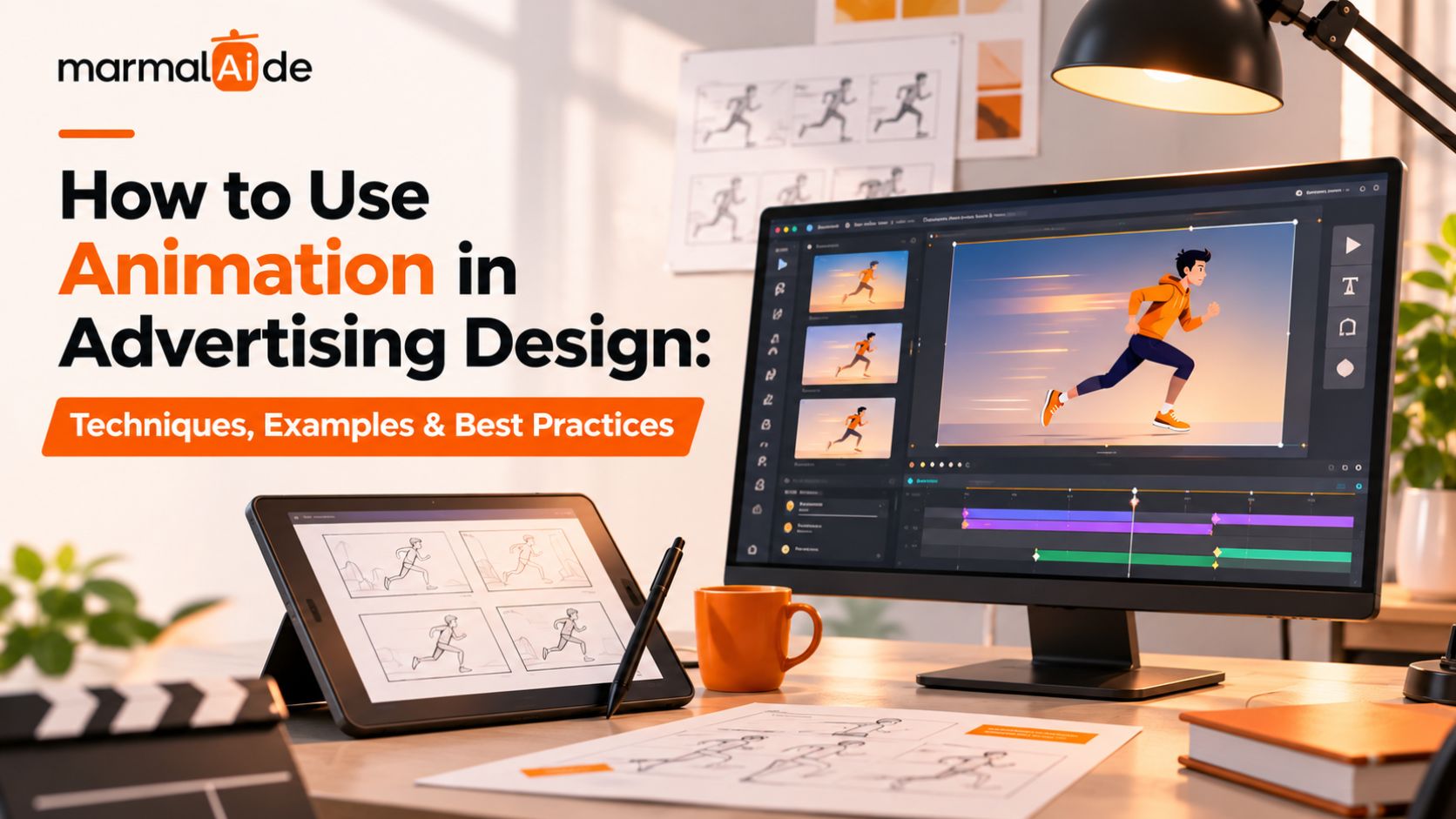
Static ads can show a product, offer, or message. But they cannot always show how a product works, how its features connect, or how a customer uses it. Animation gives brands a way to communicate these details through movement.
The challenge is knowing what to animate and why. Adding movement to every element can distract viewers from the message. This article explains how to use animation in design, which techniques work for advertising, and how brands can create animated ads that serve a clear campaign goal.
What Is Animation in Design?
Animation in design means adding movement to visual elements such as text, illustrations, shapes, icons, and product images. Designers mostly use this to guide attention, explain an idea, or show a change over time.
In advertising, animation in graphic design can turn a static product visual into a short demonstration, make a headline appear at the right moment, or show how a service works. It can also bring a brand mascot or logo to life.
Motion graphics, 2D and 3D animation, and kinetic typography are common forms. The right choice depends on the message, audience, platform, and production budget.
What Are the Benefits of Animation in Design?
Animation gives advertisers more ways to show information than a static image alone. Its value depends on what the movement helps the viewer understand.
- Show how a product works: Animate a product feature, process, or user journey instead of relying on several lines of copy.
- Make complex ideas easier to follow: Use moving diagrams, icons, and labels to explain software, technology, or services.
- Direct attention: Bring a headline, product benefit, offer, or CTA into focus at the right moment.
- Build a recognizable visual style: Use consistent movement, color, typography, and characters across campaigns.
- Tell a short story: Show a problem, product solution, and outcome in a sequence of frames.
Animation can also support a wider performance creative strategy, where brands test different messages and formats against campaign goals.
What Are the Different Types of Animation in Design?
Different animation design techniques serve different creative needs. Choose a style based on the product and the information the ad needs to communicate.
| Type | Description | Advertising use |
| 2D animation | Moves flat illustrations, characters, and backgrounds. | Social media ads, explainers, and brand stories. |
| 3D animation | Adds depth, lighting, and realistic details to objects. | Product demonstrations and product launches. |
| Motion graphics | Animates text, shapes, icons, and charts. | Promotional ads and product feature highlights. |
| Kinetic typography | Uses movement to emphasise words and headlines. | Offer announcements and message-led ads. |
| Whiteboard animation | Reveals illustrations in a drawing sequence. | Explaining services and complex processes. |
| Stop-motion | Creates movement through a sequence of photographs of physical objects. | Food, lifestyle, and product advertising. |
How to Use Animation in Design for Advertising
You do not need to animate an entire design to make it more useful. Start with the element that needs attention or explanation, then choose a movement that supports it.
Animate Product Features
Show a product feature in use instead of relying on a static product shot. For example, an ad for a skincare bottle could animate the packaging, texture, and application sequence. A software ad could show a feature being used on screen.
Use Kinetic Typography for Key Messages
Animate the headline, offer, or one important product benefit. Keep the words on screen long enough to read. Avoid moving several lines in different directions at once.
Add Movement to Brand Elements
Animate a logo, mascot, icon, or recurring graphic device. Use the same motion style across campaigns so the movement becomes part of the brand’s visual identity.
Animate Offers and Calls to Action
Use a simple reveal, highlight, or transition to draw attention to a discount, launch date, or CTA. Keep the offer and next step clear. The animation should not delay the information viewers need to act.
Explain a Process With Motion Graphics
Use numbered steps, arrows, labels, and moving diagrams to show how a product or service works. This approach is useful for SaaS, finance, and other products that are difficult to explain through product photography alone.
Brands creating short-form campaigns can also adapt their visuals for AI video ads for Shopify brands and other product-led placements.
What Are Some Animation Design Examples From Brands?
These animation design examples show how brands use different styles to communicate a message.
Duolingo – Duo’s Work Day: Duolingo uses its owl mascot in humorous workplace situations. Character animation gives the campaign a recognizable face and supports the brand’s playful social voice.
McDonald’s – The Great Story of a Small Christmas Tree: The animated Christmas campaign uses 3D storytelling to build an emotional connection. The product does not need to dominate every frame for the brand to remain part of the experience.
Canpack – Create That Feeling: The campaign uses motion graphics, textures, and sound to communicate the sensory experience of beverage packaging. It shows how animation can sell a feeling rather than list product features.
Google Project Sunroof: Google uses animation to explain how its solar information service works. Moving visuals make an abstract service easier to understand.
The lesson is not to copy a brand’s animation style. Identify what the movement helps communicate, then choose a technique that suits your own product and audience.
How to Create Animated Designs for Advertising
A clear production process helps teams create animated designs without adding unnecessary effects or revisions.
- Set the campaign objective: Decide whether the ad needs to introduce a product, explain a feature, promote an offer, or drive a specific action.
- Choose the design elements: Select the product image, headline, icons, illustrations, or other assets that need movement.
- Pick an animation style: Match the style to the brand, audience, message, and placement.
- Create a storyboard: Plan the order of scenes and decide what viewers should see in each frame.
- Animate and edit: Set the movement, timing, transitions, text, and sound. Keep each scene focused on one message.
- Export for each platform: Prepare the right aspect ratio, duration, captions, and file format for each placement.
- Review the final creative: Check the animation on mobile and desktop. Make sure the message and CTA remain clear.
This process also helps teams produce variations from one concept. For more ideas on scaling production, see how generative AI supports video content for growth marketing.
What Are the Best Practices for Effective Animation in Design?
Good animation makes the message easier to follow. These animation design best practices help keep the creative focused.
- Give every movement a purpose: Animate an element only when the movement explains, highlights, or guides something.
- Show the main message early: Put the product, offer, or brand in front of viewers before they scroll away.
- Keep the visual style consistent: Use the same brand colors, fonts, illustration style, and movement patterns throughout the ad.
- Make text easy to read: Avoid fast transitions, crowded frames, and small text.
- Design for silent viewing: Use captions and on-screen text so viewers can understand the ad without audio.
- Keep loops under control: Avoid continuous movement that distracts from the message.
- Check file size and playback: Compress assets and test them across devices and placements.
- Test before scaling: Compare different hooks, animation styles, and CTAs to find what works for the campaign.
For campaigns that combine animation with creator-led visuals, multi-format UGC video platforms can also help teams plan content for different placements.
How Do You Measure the Performance of Animated Ads?
Measure animated ads against the goal of the campaign. Views alone do not show whether the creative is bringing in customers.
- Watch time and completion rate: Check whether viewers stay long enough to see the main message.
- Engagement: Track reactions, shares, comments, and other interactions relevant to the platform.
- Click-through rate: Measure how many viewers click the ad after seeing it.
- Conversions: Track purchases, sign-ups, inquiries, or other actions tied to the campaign.
- Cost per result: Compare the cost of generating the required action across creative versions.
Compare animated and static versions using the same audience, offer, placement, and campaign objective. Otherwise, you may not know whether the result came from the animation or another change.
How Does Marmalaide Help Brands Produce Advertising Creatives?
Marmalaide combines filmmaker-led production with generative AI to create video ads and marketing assets. From scripting to final edits, its team handles the creative production process.
Brands can use Marmalaide to produce:
- UGC-style videos for paid social advertising
- Product demonstrations and explainer videos
- Short-form video ads for Meta, TikTok, YouTube, and CTV
- Creative variations for different products, audiences, and campaigns
- Static advertisements and carousel posts
See how AI ad creative production works or review the available subscription plans.
Related reading: AI Ad Creatives for Apps
Get Your First Campaign Moving with Marmalaide
The $1,999 Marmalaide Pilot gives brands a 30-second master commercial, two 10–15-second cutdowns, and two static ads or posts. It also includes creative adaptations for multiple channels, campaigns, SKUs, and geographic targets.
FAQs
Can you animate an existing graphic design?
Yes. You can animate selected elements in an existing design, such as text, icons, product images, shapes, or a logo. Keep the original layout and brand style intact unless the campaign needs a redesign.
Do graphic designers need to learn motion design?
Graphic designers can use basic animation skills to create social posts, short ads, and simple transitions. Complex 3D and character animations can require a specialist.
Should every animated ad include sound?
No. An animated ad should communicate its main message without sound because many viewers watch social content on mute. Music and sound effects can add impact, but captions and clear visuals should carry the message.
When should you use animation in design?
Use animation when you need to demonstrate a product, explain a process, highlight an offer, or show a change that a static image cannot communicate clearly.
What are some examples of animation in advertising?
Duolingo uses character animation to create engaging social ads. McDonald’s uses 3D animation for brand storytelling, while Google uses animated visuals to explain its Project Sunroof service.
What makes animation effective in design?
Effective animation in design communicates one clear message, uses purposeful movement, maintains brand consistency, and keeps text readable. It should support the ad’s message rather than distract from it.