Video advertising helps brands reach specific audiences, explain products quickly, and drive action across social platforms, websites, streaming services, and digital publishers. The right format can turn a product feature, customer story, or offer into a clear message that viewers can understand within seconds.
But types of video advertising go beyond pre-roll and social media ads. Brands can use native video ads for discovery, CTV and OTT ads for broad reach, UGC-style ads for social performance, interactive formats for engagement, and shoppable videos to shorten the path to purchase.
This blog covers the types of video ads, key video advertising formats, their benefits, real-world video ad examples, and video advertising best practices. It also explains how to choose the right format and build video advertising strategies that support different campaign goals.
What Are the Types of Video Advertising?
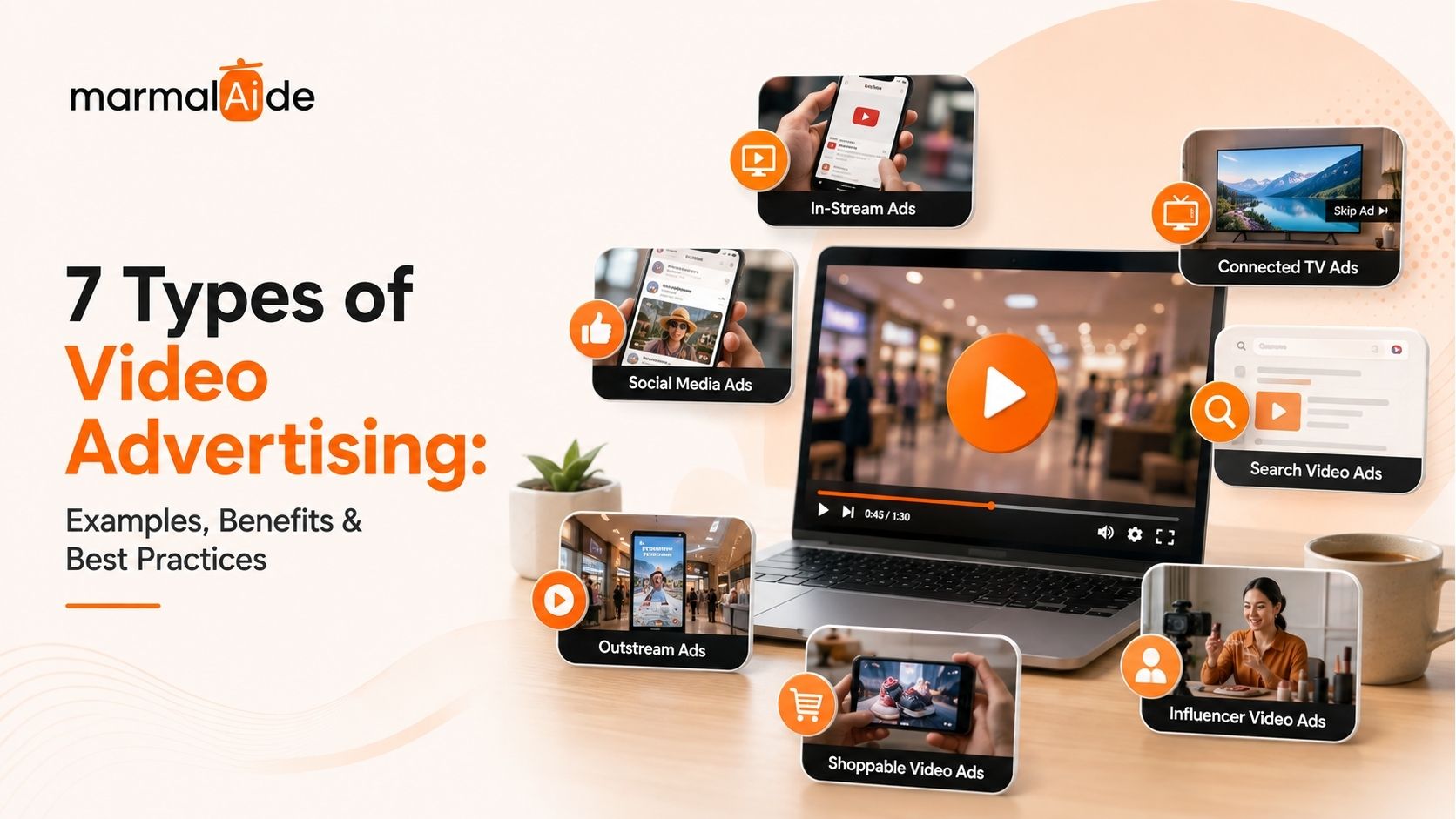
The main types of video advertising include in-stream, outstream, social, native, CTV/OTT, interactive, and shoppable video ads. Each format changes where the ad appears and how viewers interact with it, so the right choice depends on the campaign objective and viewing environment. The following video advertising formats cover the most common ways brands use video ads in digital campaigns:
1. In-Stream Video Ads
In-stream ads play inside a video player before, during, or after the content a viewer chooses to watch. They work well when you want to reach people already engaged with video content, including on platforms such as YouTube and other streaming environments.
2. Outstream Video Ads
Outstream ads play outside a traditional video player, often within articles, feeds, or display placements. The viewer does not need to have chosen to watch video content for the ad to appear, which allows brands to extend video campaigns beyond traditional video inventory.
3. Social Media Video Ads
Social video ads appear in placements such as feeds, Stories, and Reels. Brands can tailor the creative to each platform, including the opening hook, aspect ratio, captions, length, and CTA. This makes social video useful for both awareness and performance campaigns.
4. Native Video Ads
Native video ads are created to fit the surrounding platform or publisher experience. The format, appearance, and placement follow the environment in which the ad appears, making native video useful for discovery and consideration campaigns.
5. CTV and OTT Video Ads
CTV and OTT ads reach viewers through connected TVs, streaming devices, and internet-delivered television services. These video advertising formats bring TV-style video into digital environments and can support targeted brand campaigns. CTV is also expanding beyond standard commercial spots into formats such as shoppable, choice-based, and interactive ads.
6. Interactive Video Ads
Interactive video ads let viewers do more than watch. Depending on the platform and ad technology, viewers may select an option, explore additional information, or interact with products and other elements within the ad experience.
7. Shoppable Video Ads
Shoppable video ads connect product discovery with actions such as exploring a product, visiting a product page, or making a purchase. They work particularly well for ecommerce campaigns where reducing the distance between viewing and buying matters.
For types of video ads in digital marketing, don’t choose a format simply because it is popular. Match the placement to the audience, campaign goal, platform, and action you want the viewer to take.
What Are the Benefits of Video Advertising?
Video advertising helps brands demonstrate products, build awareness, reach defined audiences, and drive measurable actions. Unlike static formats, video combines visuals, motion, audio, and storytelling, giving advertisers more ways to communicate a product or message.
The key benefits of video advertising include:
- Demonstrates products clearly: Show how a product works, what it looks like in use, or how a service solves a specific problem.
- Builds brand awareness: Video gives brands more creative space to communicate their identity, message, and value proposition.
- Reaches specific audiences: Digital video supports targeting across factors such as geography, device, context, and audience characteristics.
- Supports different campaign goals: Brands can use video for awareness, consideration, engagement, leads, sales, and other business outcomes rather than treating every campaign as a reach play.
- Makes creative testing easier: Teams can test different hooks, messages, formats, and versions to identify what resonates with an audience. IAB recommends ongoing testing and learning rather than treating creative as a one-time exercise.
- Works across screens: Video campaigns can run across mobile, web, social, and connected TV, with creative adapted to different screen sizes and placements.
- Provides measurable performance data: Marketers can track metrics such as impressions, completion rate, reach, frequency, engagement, attention, and brand lift, depending on the campaign.
For teams that need to turn one campaign concept into multiple creative assets, Marmalaide’s AI ad creative production services can support video, static, carousel, motion, and campaign variations for different placements.
Video Marketing and Video Advertising: What’s the Difference?
Video advertising is paid video promotion, while video marketing covers the wider use of video to attract, educate, engage, and convert audiences. A paid YouTube ad is video advertising. A product tutorial, customer testimonial, or social video can be part of video marketing without being an ad.
Here’s how the two differ:
| Factors | Video Advertising | Video Marketing |
| Distribution | Paid placements on platforms and publisher sites | Owned, organic, earned, and paid channels |
| Primary goal | Drive a specific campaign outcome | Build awareness, engagement, consideration, or customer relationships |
| Content | Paid video ads created for specific placements | Ads, tutorials, demos, testimonials, webinars, social videos, and more |
| Audience | Targeted through paid media settings | Reached through search, social, email, websites, communities, and paid channels |
| Key metrics | Impressions, views, clicks, conversions, cost per result | Traffic, engagement, leads, conversions, retention, and other business metrics |
The two can work together. A brand might publish a product tutorial on its website, share a shorter version on social media, and run a paid cut of the same concept as a video ad.
What Are Some Effective Video Ad Examples by Campaign Goal?
The best video ad examples match the creative to the action you want the viewer to take. An awareness ad needs a different message from a product ad, lead-generation campaign, or retargeting creative. The following examples show how brands can use video advertising strategies at different stages of the customer journey:
1. Brand Awareness
A new skincare brand could use a 15-second video to introduce its hero product, show the product in use, and establish one memorable brand message. The goal is recognition, not an immediate purchase.
2. Product Consideration
A SaaS company could show how its platform solves a specific workflow problem in under a minute. A short screen recording, voiceover, and clear benefit can give potential buyers enough context to explore the product further.
3. Lead Generation
A B2B company could use a customer testimonial that identifies a common problem, explains how the company solved it, and ends with a demo or consultation CTA. This gives the viewer a reason to submit their details.
4. Product Launch
A consumer brand launching a new product could combine product close-ups, key features, use-case footage, and a launch offer. The same core concept can then become shorter versions for social feeds, paid ads, and retargeting.
5. Retargeting
A retailer could show a product that a visitor previously viewed, highlight one useful feature, answer a common objection, and direct the viewer back to the product page. The message can focus on the decision barrier rather than introducing the product from scratch.
6. Customer Education
A company selling a complex product could use a short explainer to answer one question prospects commonly ask. This type of video ad in digital marketing can reduce confusion while moving interested viewers closer to a decision.
These video ad examples show why creative strategy matters as much as format. The strongest campaigns give each audience a clear reason to watch and a clear next step.
What Are the Best Practices for Creating Effective Video Ads?
Effective video ads lead with a clear message, match the platform, and give viewers one specific action to take. The best video advertising best practices also align the creative with the audience, offer, placement, and campaign goal before production starts.
Following are the key practices to apply:
- Lead with the audience’s problem: Start with a pain point, desired outcome, or relevant product benefit instead of a long brand introduction.
- Make the opening count: Use the first few seconds to establish the main idea with a strong visual, question, product moment, or specific benefit.
- Adapt creative to the platform: Adjust the aspect ratio, pacing, text, duration, and CTA for Instagram, YouTube, CTV, or other placements instead of resizing one asset everywhere.
- Keep one message per ad: Focus on one benefit, problem, feature, offer, or objection. This keeps the creative clear and makes video advertising strategies easier to test.
- Show the product or result: Use product demonstrations, screen recordings, customer experiences, or visual proof when they communicate the value faster than narration.
- Create multiple variations: Test different hooks, opening visuals, messages, CTAs, and offers around the same core concept to find what works.
- Make the CTA specific: Tell viewers what to do next, such as Shop Now, Book a Demo, Get a Quote, or Learn More, based on the campaign goal.
- Measure the right outcome: Track reach and completed views for awareness campaigns, and clicks, leads, conversions, or revenue for performance campaigns.
How Can Marmalaide Help You Create Video Ads at Scale?
Creating one video ad is only the starting point. The bigger challenge is producing enough creative variations to test different hooks, messages, formats, audiences, and placements.
Marmalaide combines filmmaker-led creative direction with generative AI to produce video ads, UGC-style ads, static and motion creatives, and campaign variations. Its team manages the process from concept and scripting through production, editing, review, and delivery.
For a video advertising campaign, Marmalaide can help create:
- AI UGC ads for paid social campaigns and product promotions
- Founder and brand story videos that build familiarity and communicate the brand narrative
- AI-powered product launch videos for new products, services, and campaigns
- AI avatar explainers for product education, demonstrations, and website content
- Localized creative variations for different audiences, markets, messages, and campaigns
- Static creatives, carousel ads, and video cutdowns for multi-channel distribution
- OOH and billboard creatives for campaigns that extend beyond digital placements
Marmalaide offers subscription plans with full creative services for ongoing production. This gives marketing teams a way to test different creative directions without building a separate production workflow for every ad variation.
Related reading: AI Ad Creatives for Apps
Want to Try the Process First?
Marmalaide’s $1,999 Pilot lets you test its creative workflow with a defined production package: one 30-second master commercial, two 10–15-second cutdowns, and two static ads or posts, plus campaign and channel adaptations.
You work with the same scriptwriter, director, and editing team used for ongoing plans, making it easier to judge the creative quality before expanding production.
Start with the Marmalaide Pilot
FAQs
What is the Recommended Time Frame for a Video Ad?
A video ad can be anywhere from a few seconds to several minutes, depending on the platform, format, and campaign goal. For example, Google Ads supports 6-second bumper ads, skippable in-stream ads, and longer in-feed formats. For video advertising formats, the key is to deliver the main message early rather than stretching the creative to fill a specific duration.
What Is the Difference Between Skippable and Non-Skippable Video Ads?
Skippable video ads let viewers skip after a set point, while non-skippable ads require viewers to watch the designated ad duration. On YouTube, skippable in-stream ads can be skipped after five seconds, while non-skippable in-stream ads do not offer a skip option. Skippable formats give brands a short window to earn attention. Non-skippable formats work when the message is concise enough to hold attention through the full placement.
Are Video Ads Much Better Than Display Ads?
Video ads can communicate more information than static display ads because they combine visuals, motion, and audio. That does not make them automatically better. The right choice depends on the audience, campaign objective, placement, and message. A simple offer may work well as a display ad, while a product demonstration or story may benefit more from video.
What Is the Difference Between Outstream and In-Stream Video Ads?
In-stream ads play within video content, while outstream ads appear outside a traditional video player. In-stream ads can run before, during, or after other videos. Outstream formats give advertisers another way to distribute video beyond traditional video-viewing environments. The distinction matters when choosing between different types of video advertising, because placement affects how and when viewers encounter the creative.
How Do You Measure Video Advertising Performance?
Measure a video campaign against its objective, then compare performance across formats and creatives. Depending on the campaign, useful metrics can include reach, impressions, views, watch time, clicks, conversions, or cost per result. Google Ads also lets advertisers segment reporting by ad format to compare impressions, views, clicks, and conversions.